Projects
Rails To Tales- Kittanning Train Station
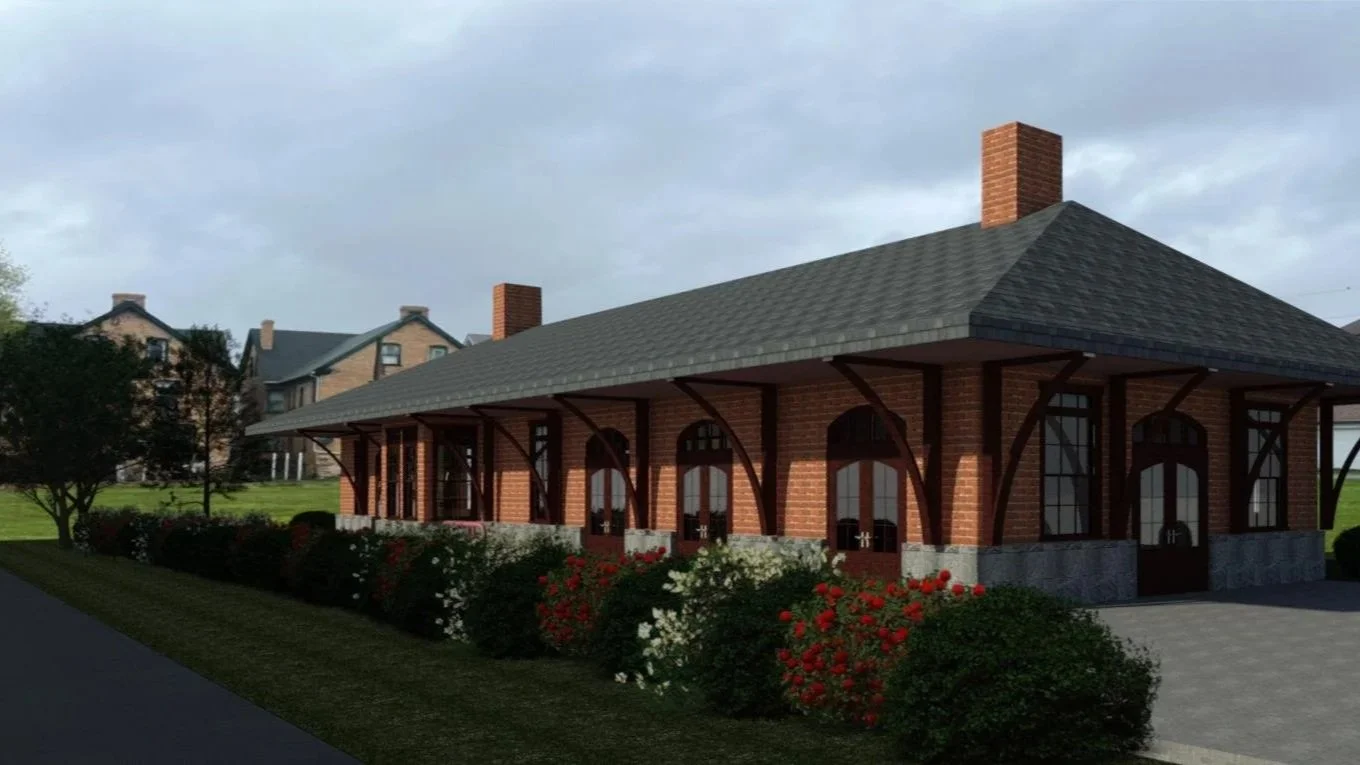
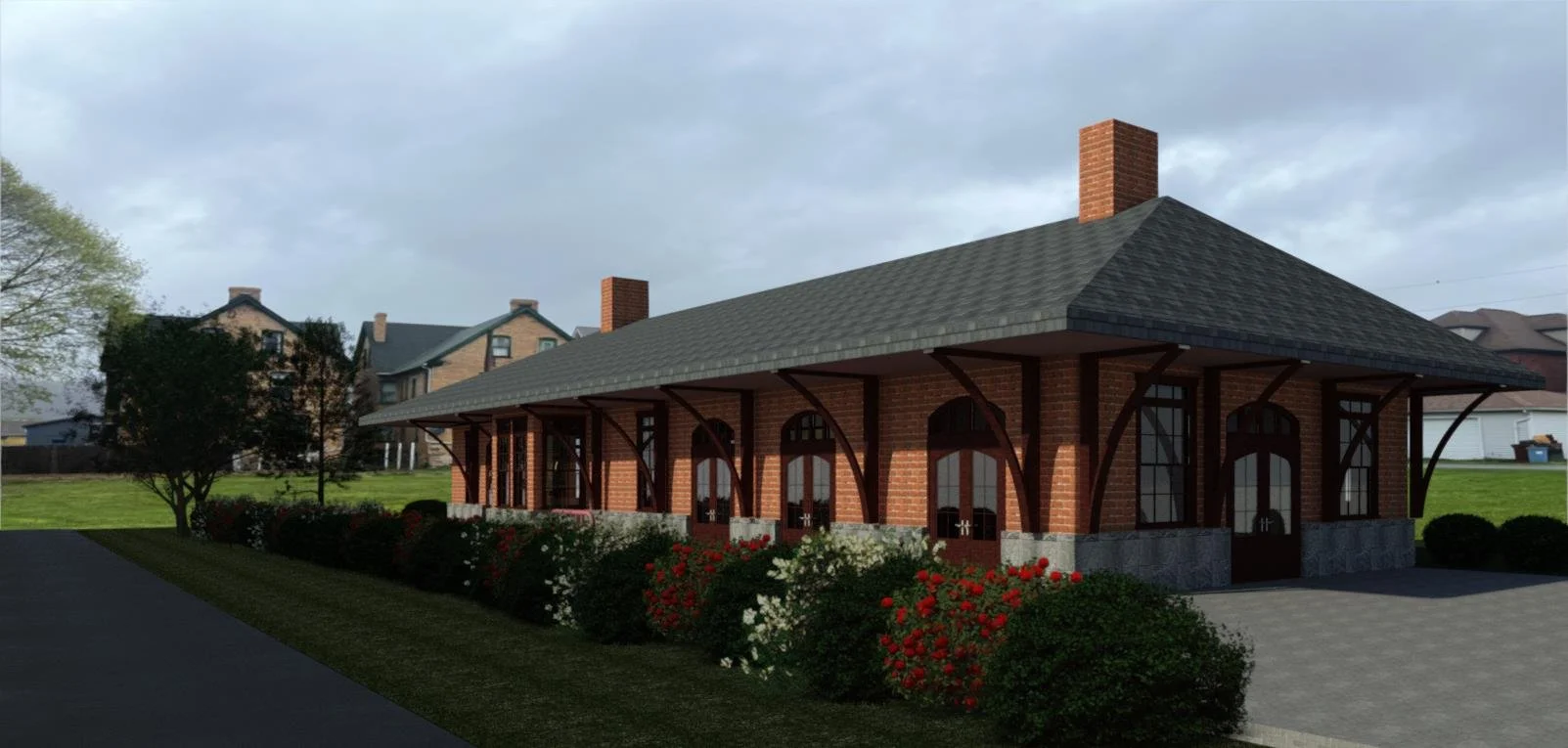
The Kittanning Train Restoration Project was a final project I did in my senior year of college.
With this project, I wanted to show how restoring a building can impact a community. Restoring a building and bringing back some of its original history in the town could not only educate people on the history of the area but also create a space for people to gather and create community.
History
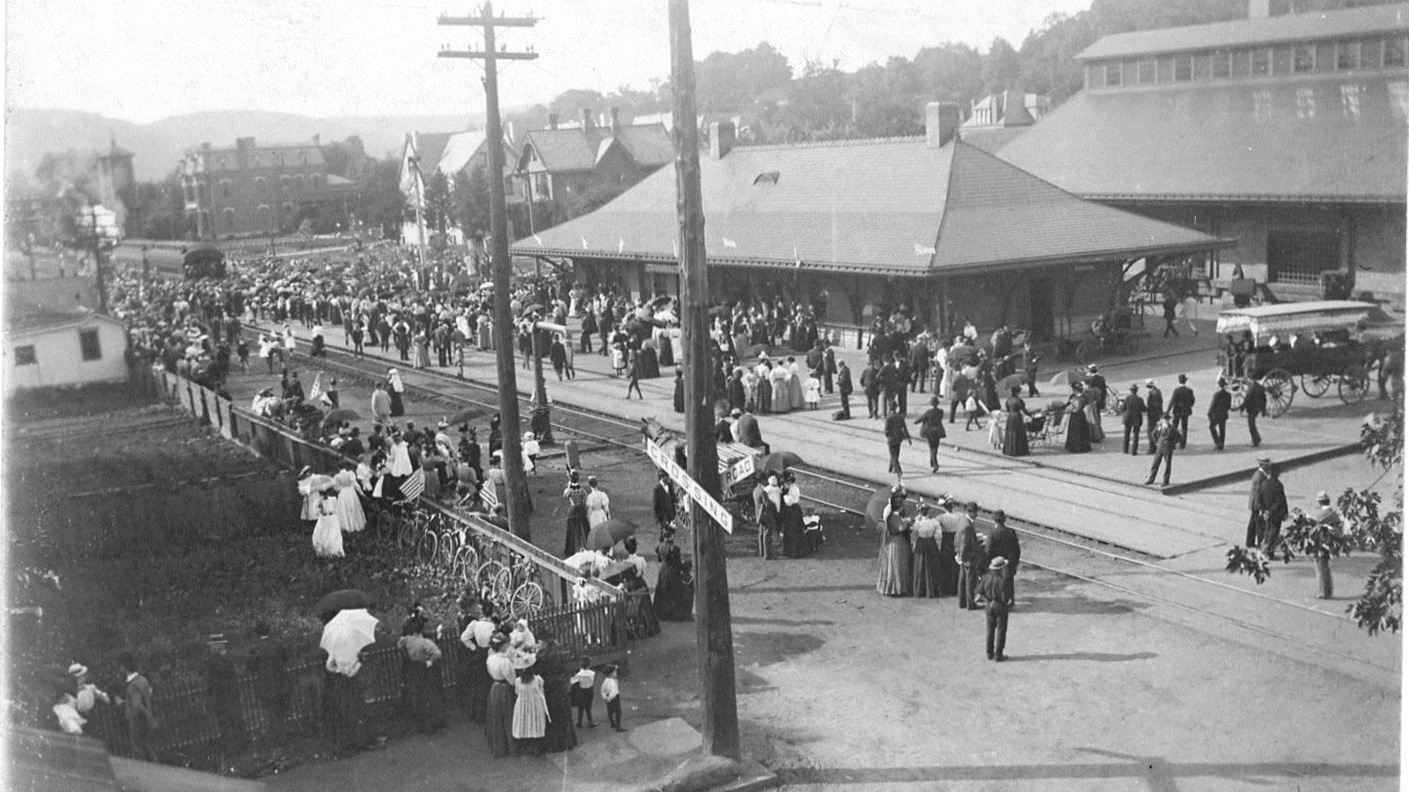
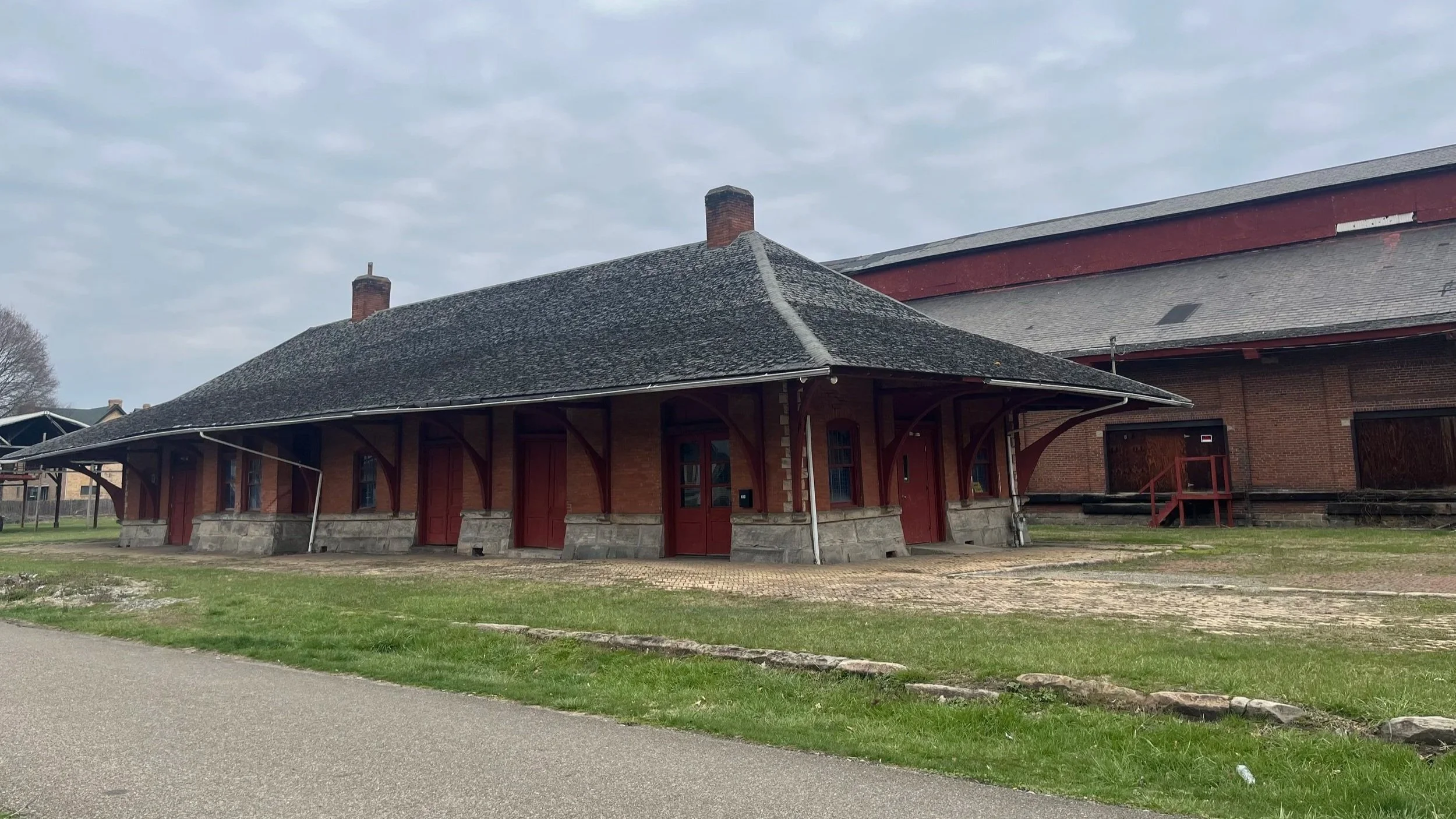
The Kittanning train station was originally built in 1895 and was used as a passenger station until 1948. Since being discontinued as a passenger station, the building has not had any official use. Recently, in 2023, the historical society purchased it with the goal of restoring it and giving the building a new purpose.
As you can see in the black-and-white photograph, the train station and its surrounding area was an active place in the town when it was in use. With the loss of the passenger station in 1948, and other nearby businesses leaving as well, this area has had a significant decline in activity.
The building will require significant renovations. The roof is in bad condition, and most of the windows and doors are broken. Along with exterior damage, the interior of the building has damaged flooring and walls. It will require a lot of work, but I believe that if the building were to be restored and repurposed, it would draw a lot of people and businesses back into the area.
To the right of the building, there is a large open field. This field could be used to host community events in the warmer months or provide land for more businesses to be built.
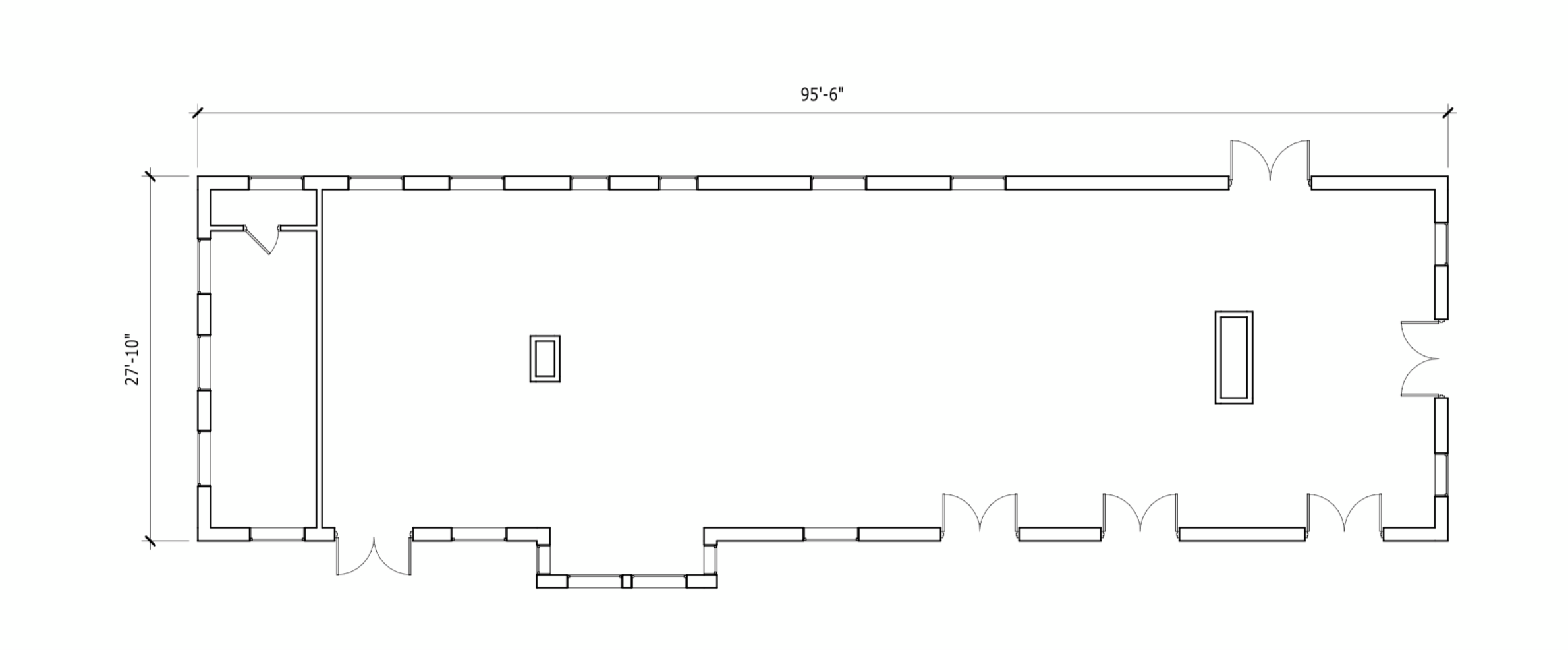
Below is the floor plan that I received from the current owner.
Primary Materials Used



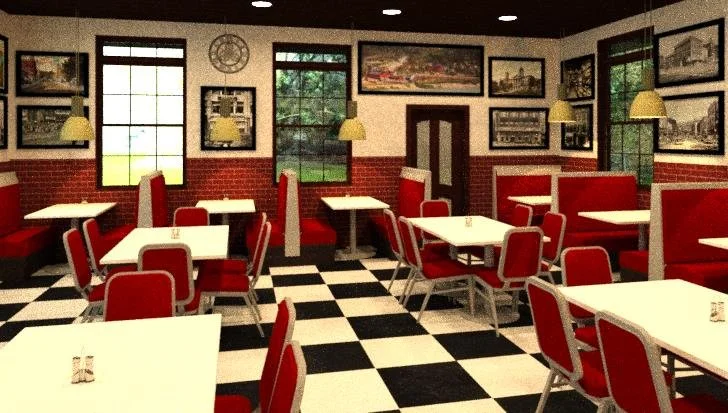
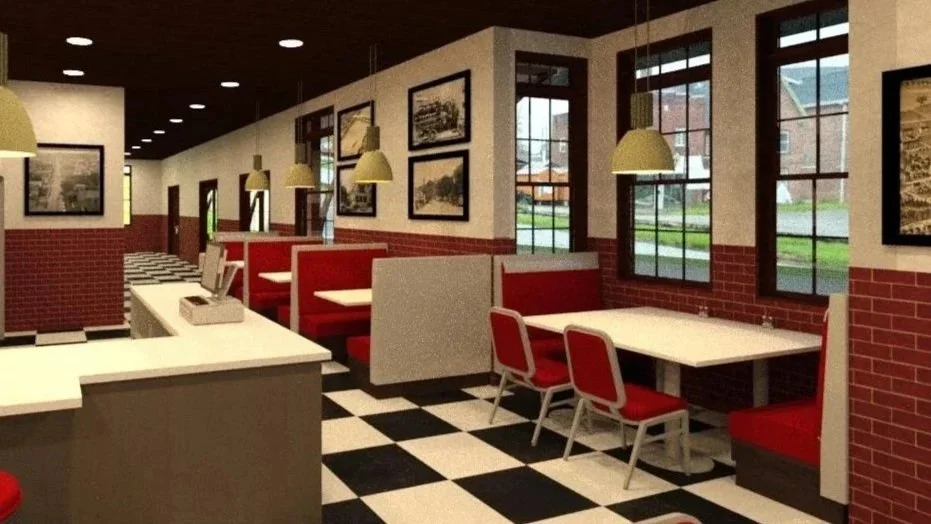
My plan was to turn the building into an early 1900s-style diner. This will restore elements of history to the building and be a unique restaurant in the area.
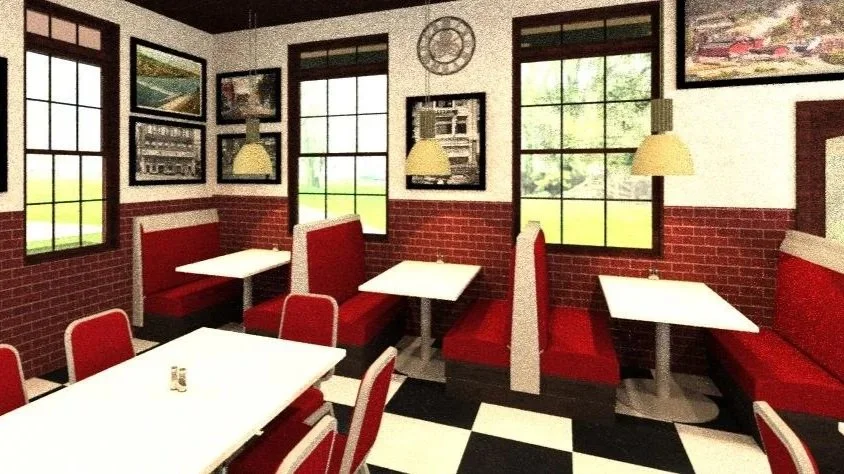
The original building had glazed brick on the interior, but much of it cannot be restored. Because of this, I decided to add red glazed tile to the interior walls of the building in order to reflect the original design. The tile will be installed on to the halfway point up the wall, in order to not overwhelm the space.
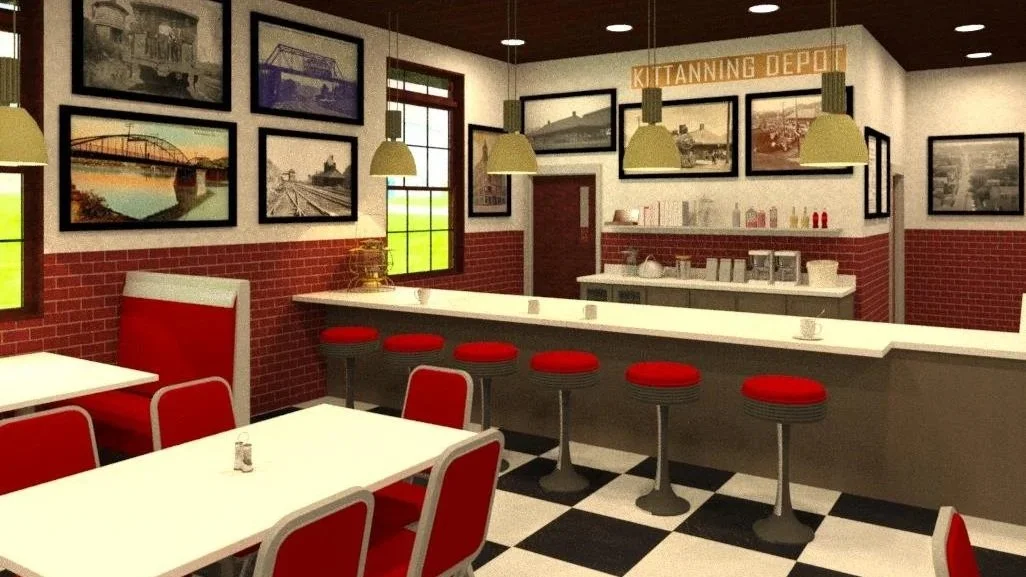
Red textile was used for the booths, chairs, and bar stools. This was done to incorporate the original colors of the building, and to help match an old-style diner. Along with this, the flooring will be black and white checkerboard tile, which was commonly used during the early 1900s.
The walls will feature historic photographs of the building and the town, along with some antiques. These will all have inscriptions on them to keep the history alive and create a visually engaging space.
I made sure to incorporate a coffee bar, as this was a trademark of early diners. Behind the bar there is access to the kitchen, allowing servers to easily move between the spaces. This will also encourage more interaction with customers, which will reinforce the communal atmosphere that was common in the early 1900s. Behind the bar, there is a shelf that will have old antiques on it such as vintage pop bottles. Above that, you can see the Kittanning Depot sign. This sign once hung outside the building when it was still being used as a train station. Luckily the sign was preserved by the Historical Society, who kept in great condition.Since the building is small and has limited seating, there is ample exterior space around the building to take advantage of during the warmer months.
Overall, I believe that restoring the building and repurposing this building as a diner would revitalize the area by attracting new business along with creating a community space for people to gather.
Wood Kitchen
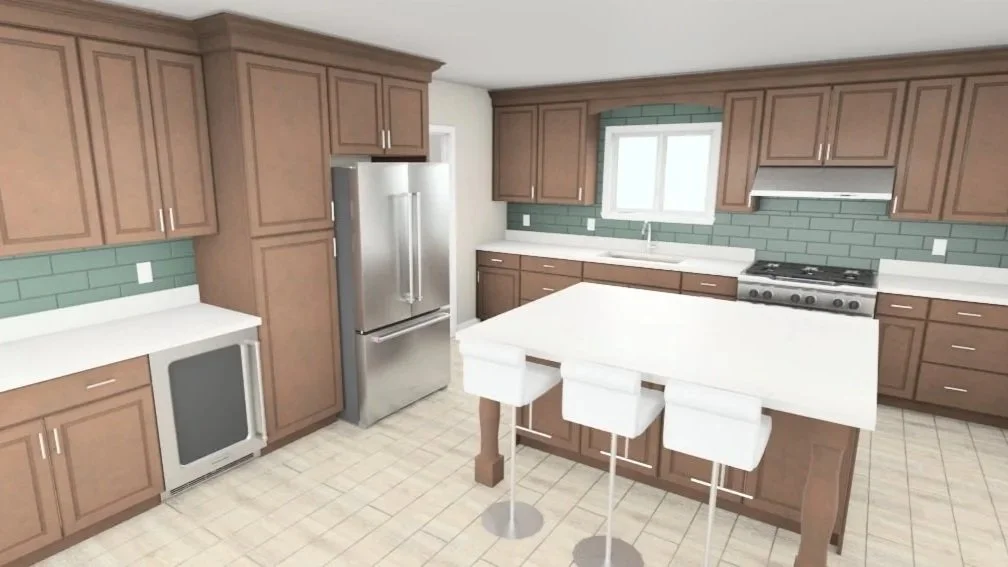
Wood Kitchen was a complete remodel for the homeowner’s current kitchen. The homeowner wanted an updated kitchen, with neutral colors.
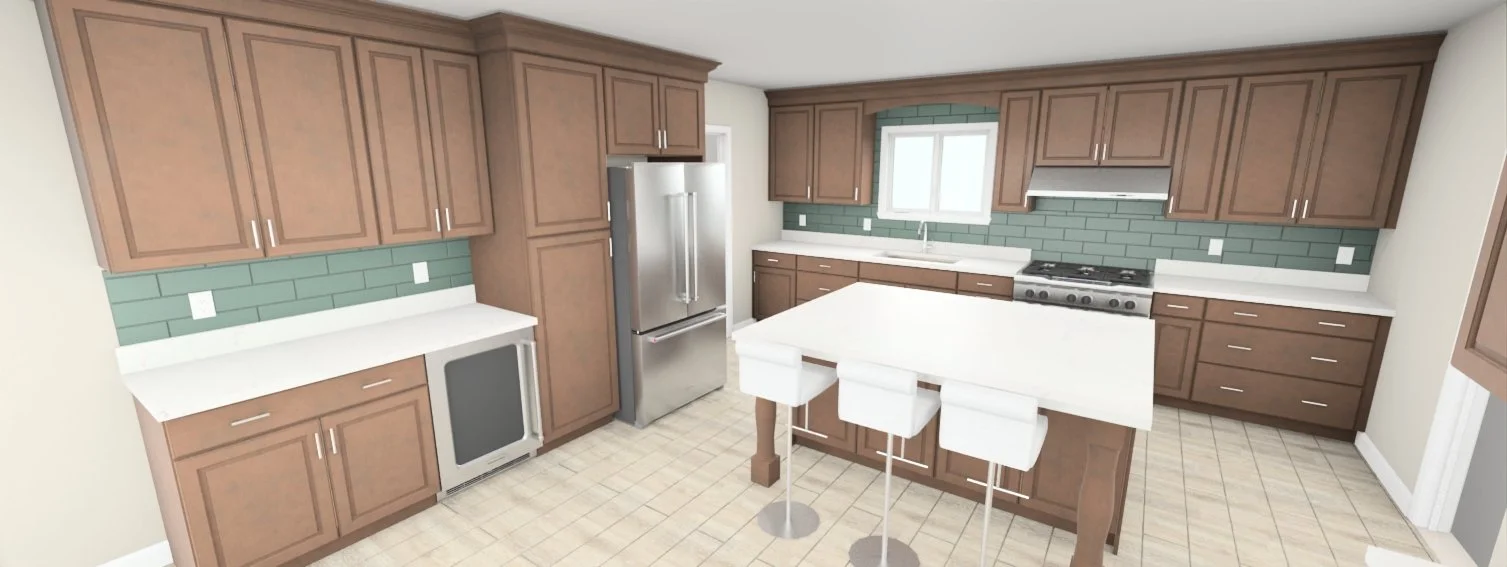
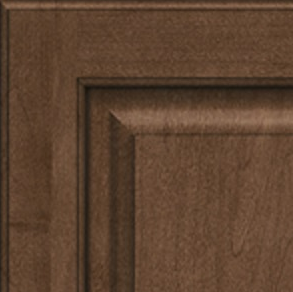
This gorgeous kitchen was designed using KraftMaid Cabinetry and a Pental Quartz countertop. The colors were chosen to represent an earth-tone and beautiful environment, as per request from the client.
Primary Materials Used


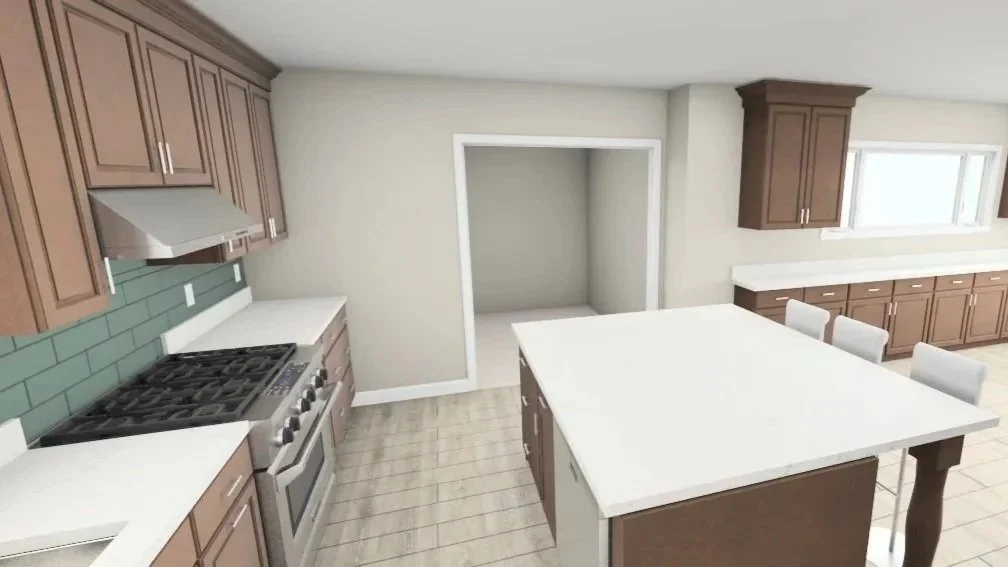
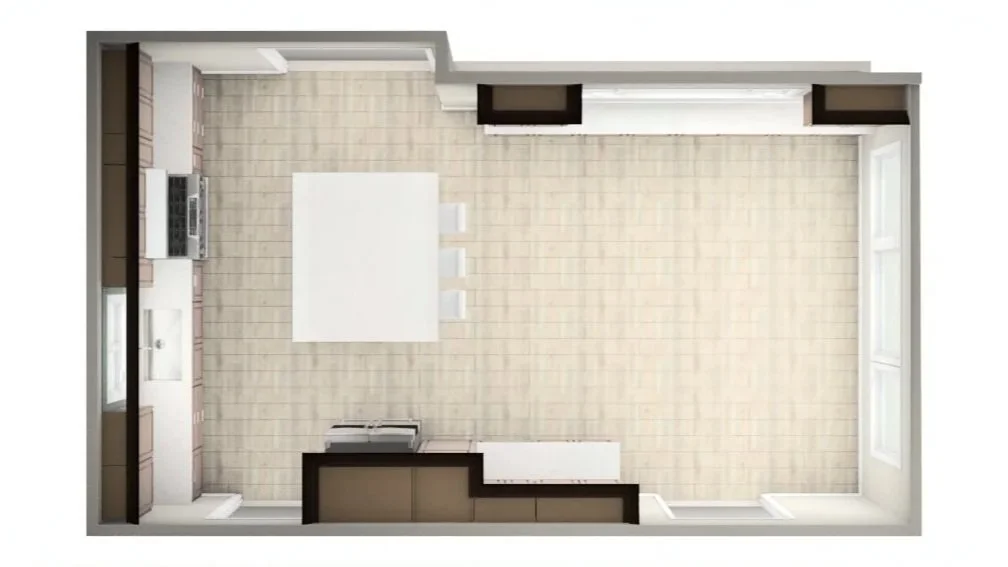
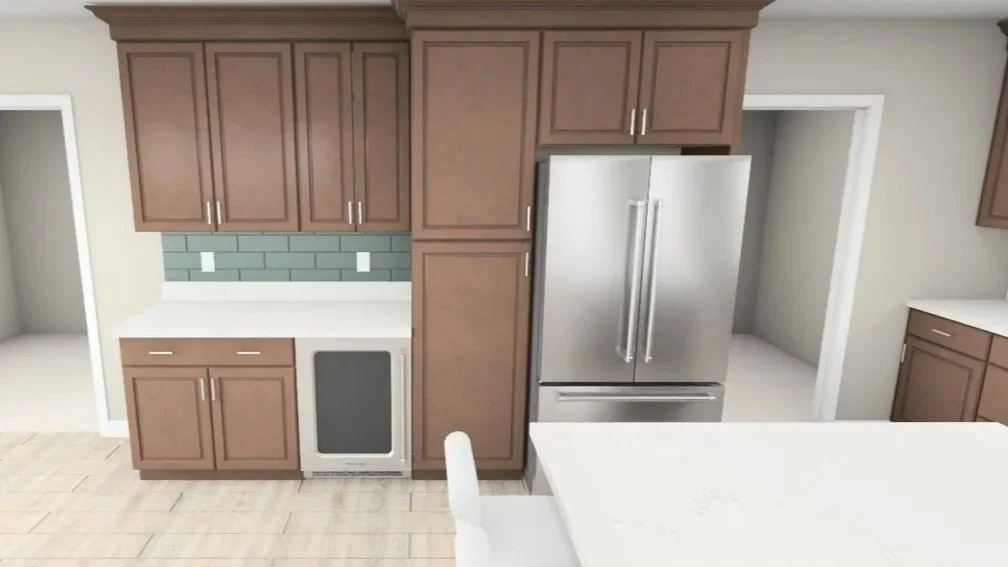
The client expressed that they enjoyed cooking and hosting, so I suggested the best course of action was to take down the wall separating the dining room and kitchen. This will create a combined, open space and in combination with island seating, will encourage conversation and togetherness.
To better accommodate cooking for large groups, we selected a 36-inch range instead of a standard 30-inch range. This will provide better functionality for the client.
When choosing materials and finishes, we focused on an earth-tone palette. The brown cabinetry combined with the green backsplash tile creates a natural environment and provides visual interest. In order to avoid overwhelming the space, we chose a quartz countertop with subtle marbling.
When looking at the top view, you can see that on the right side of the rendering there will be a medium-sized dining table. This dining table will match the cabinetry, in order to unify the room and create a cohesive, finished look.
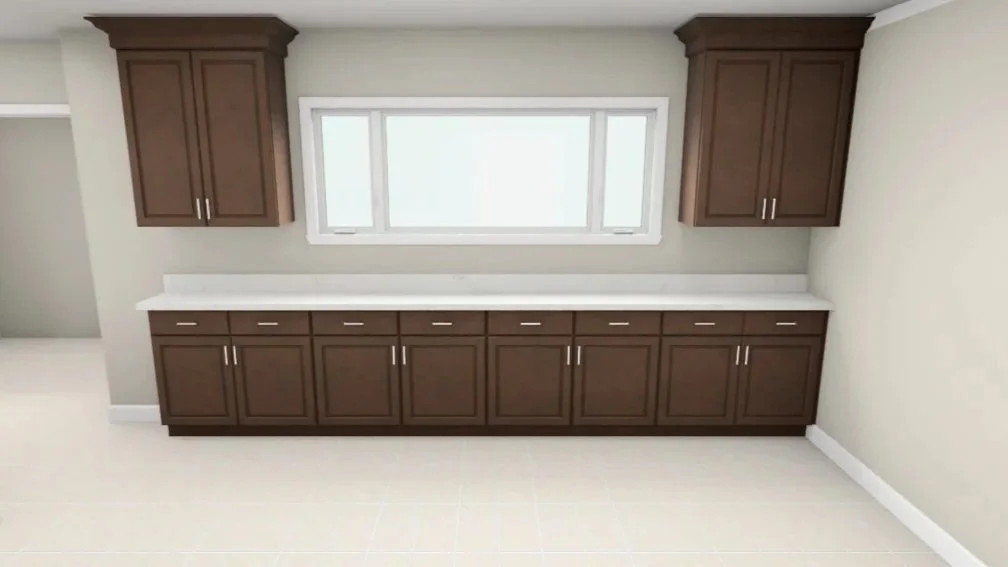
In the dining area of the space, I added some smaller cabinetry on the north wall. The cabinetry will be the same as the kitchen, to help visually connect the dining room to the kitchen. It will create a cohesive look, while adding some necessary extra storage for the homeowner.
Green Kitchen
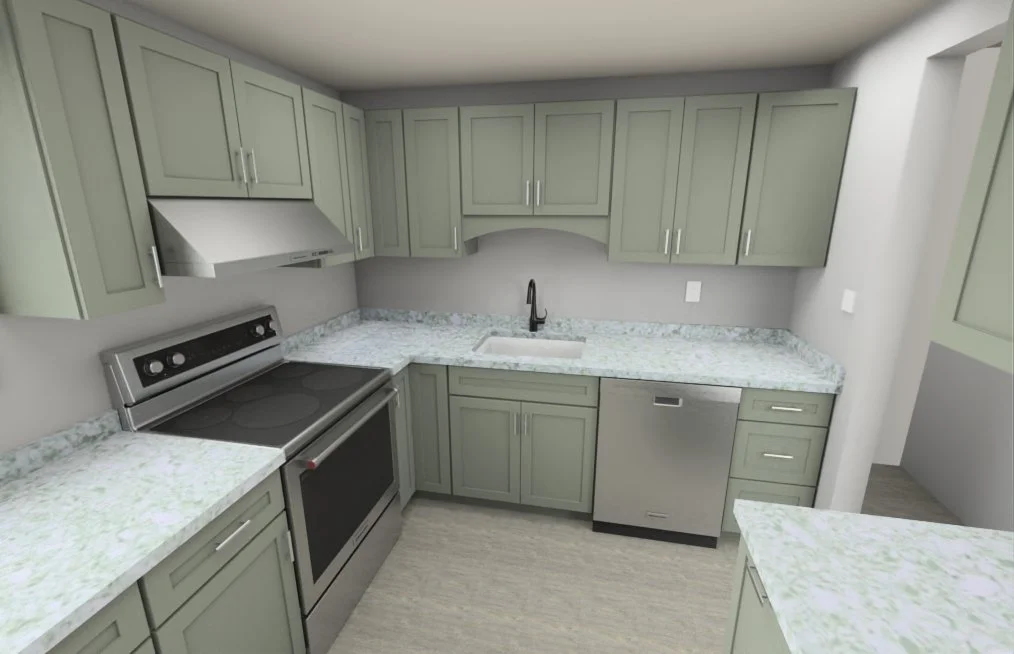
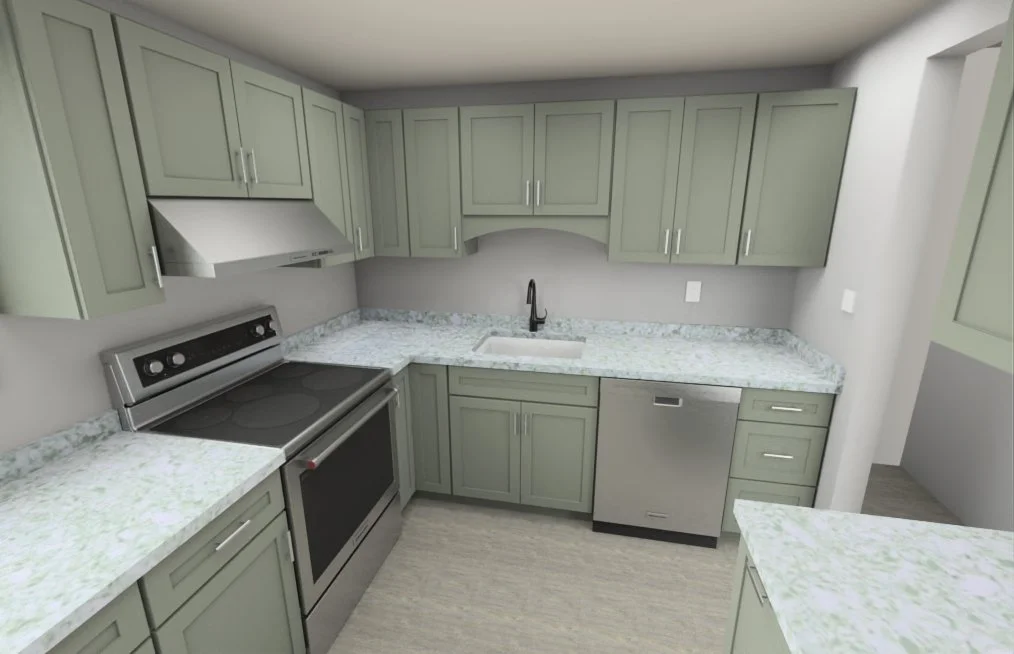
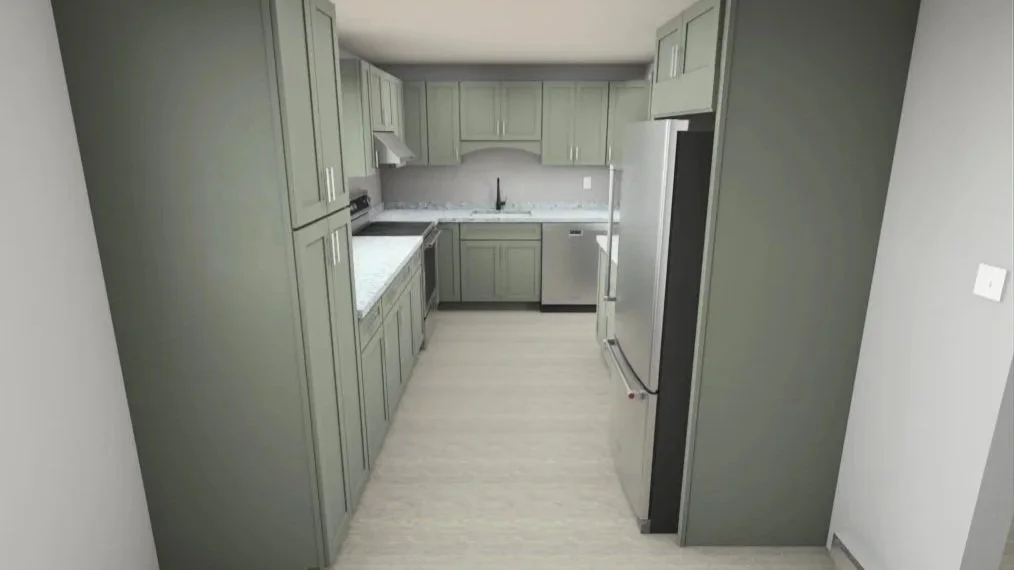
Green Kitchen was a complete remodel. The homeowner wanted to update their kitchen, and fell in love with a muted green cabinetry sample.
When discussing what the clients wants and needs were for the kitchen, their main goal was to have more counterspace. We were able to accomplish this while not intruding too far into the dining room, and giving them a beautiful and functional space.
Primary Materials Used
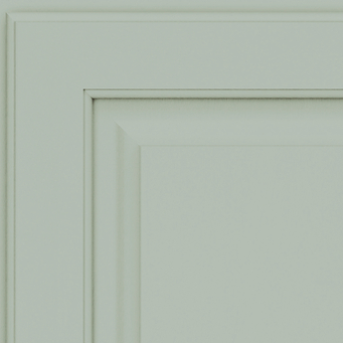


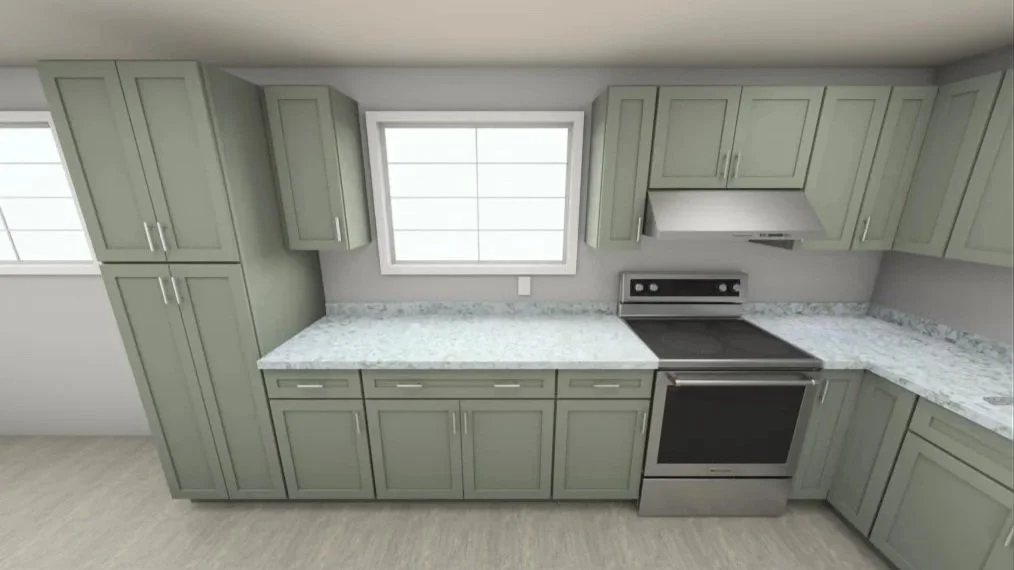
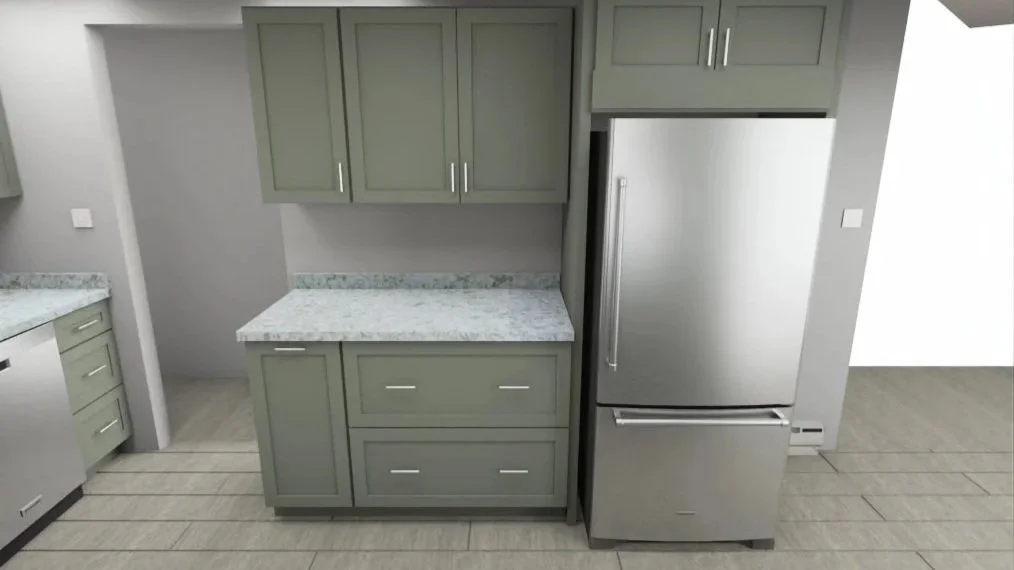
To create more counter space, we extended the countertop under the window and slightly intruded into the dining space. This gave them a lot more counter space but still left room for a small dining table. Along with creating more counterspace, we were also able to have more storage options for the client. The storage consists of a combination of different sized drawers, shelves, and a pantry. This will provide storage for pots and pans, small appliances, or anything else that they may need to store.When choosing materials, the client fell in love with a muted green door sample in the showroom. We started with this, then when looking at the quartz, we found a sample that had a very similar muted green sprinkled throughout it. Instead of doing a simple white countertop, this countertop created a lot of visual interest by matching the cabinetry so well. For fixtures, they went with an oil-rubbed bronze faucet; to match the previous light fixtures and new hardware they will choose for the door and drawer pulls.
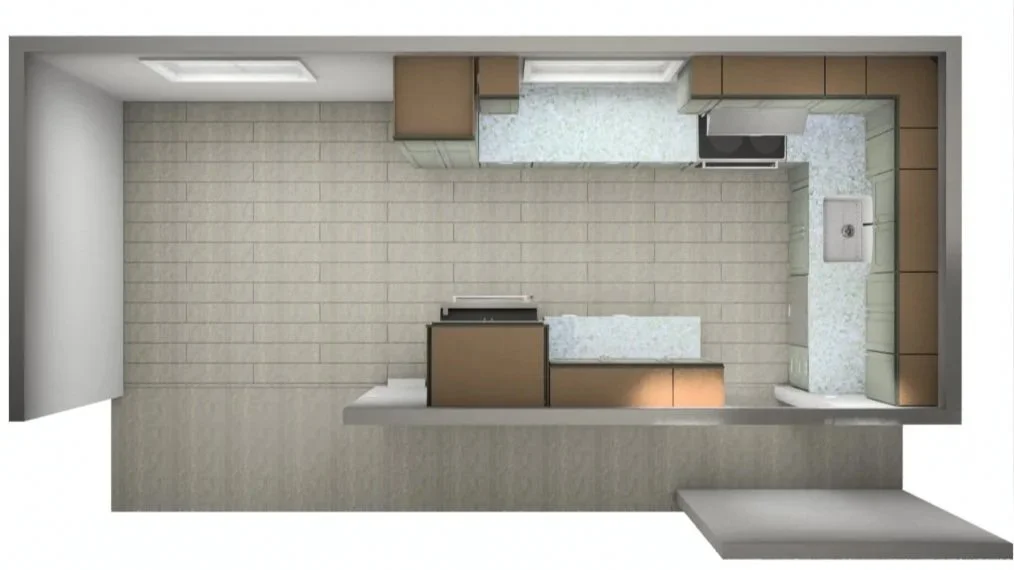
Looking at the top view, you can see that the kitchen and the dining area will be one open space. Because the kitchen is fairly small, it was a challenge to make sure that they had enough storage and counter space, without intruding too far into the dining area.The client was very happy with the final design and that we were able to meet their goals for the space.
Basement Kitchenette
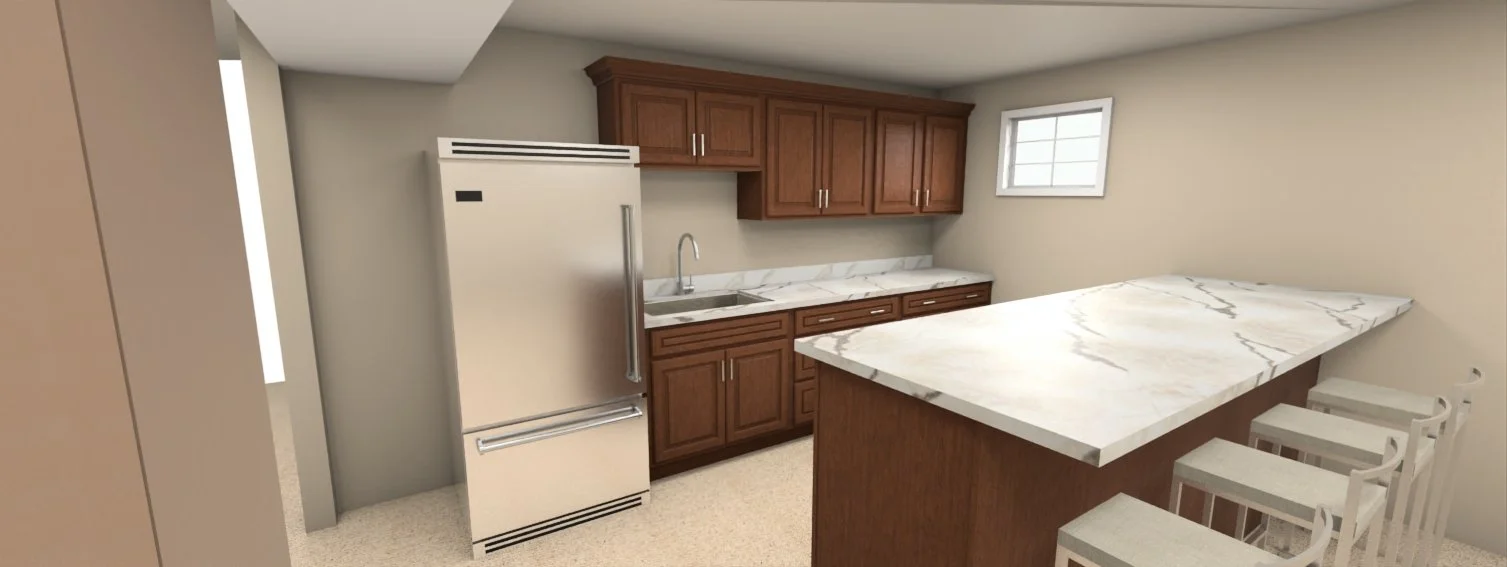
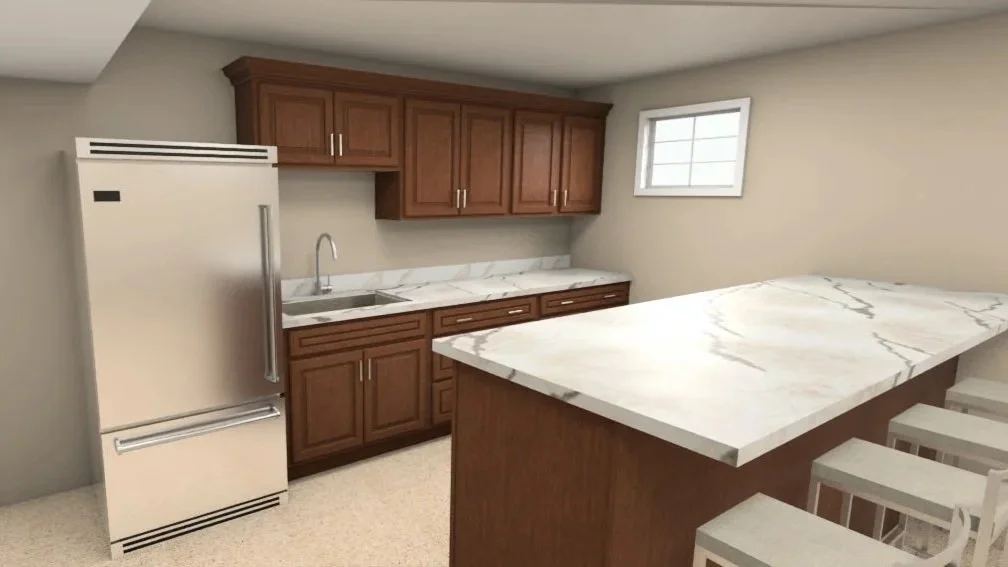
Basement Kitchenette was created to be a secondary place for the client to host.
This kitchenette was designed using KraftMaid cabinetry and a Pental Quartz countertop. The client wanted a traditional door style and countertop in order to match the rest of the house’s style.
Primary Materials Used

The client’s main goal was to have bar seating with a simple design that incorporated a fridge and sink. They wanted this space to serve as a secondary area in the home to host, but to also store some lesser-used appliances and cookware.
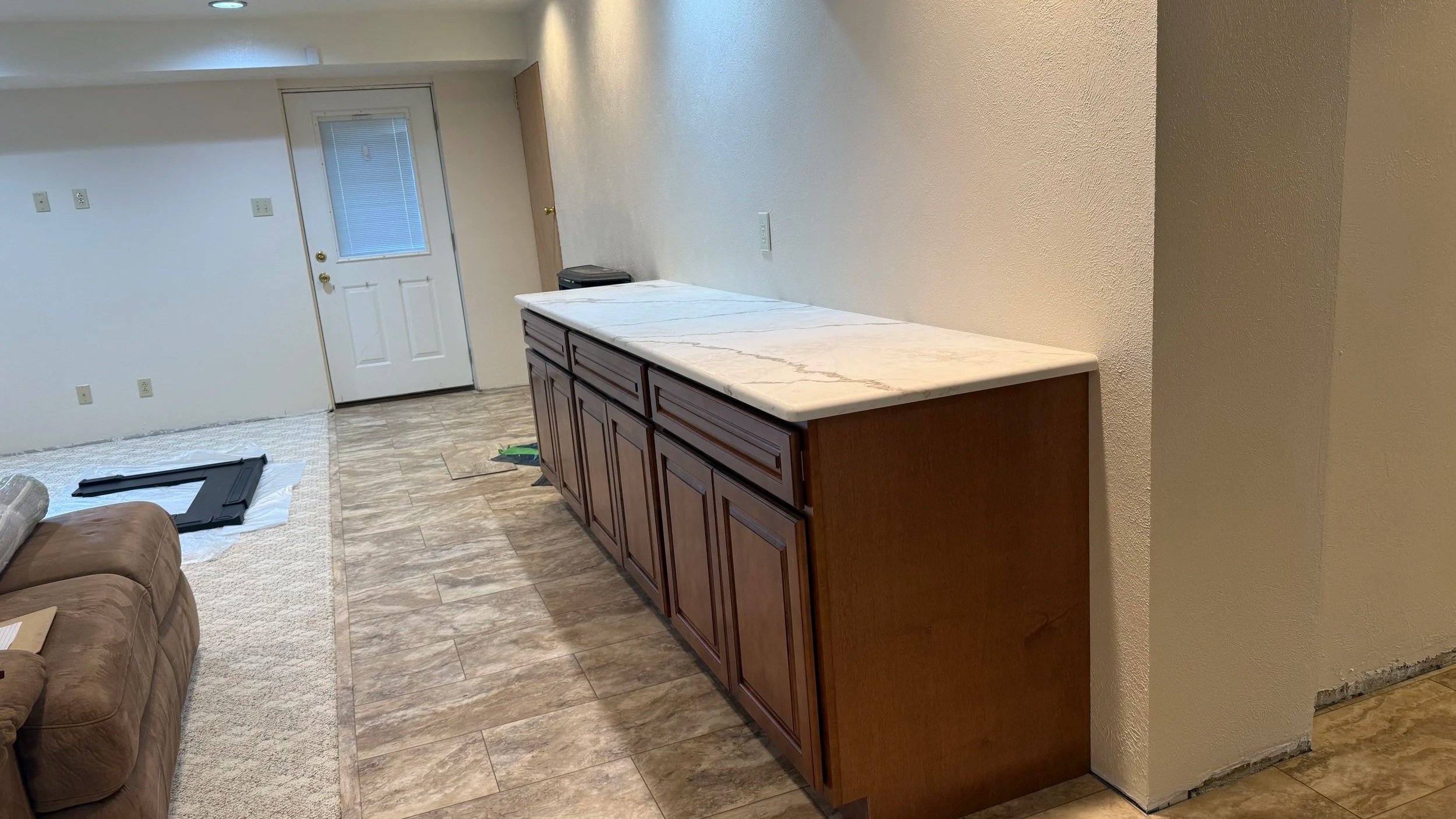
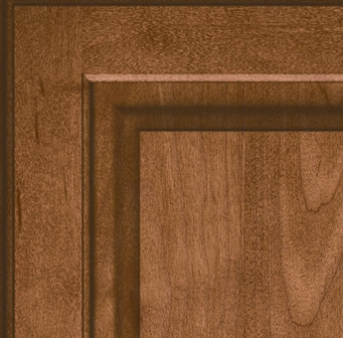
The materials and finishes chosen for this space started with the cabinetry. They wanted cabinetry that had a dark wood stain and was similar to the cabinetry in their existing kitchen and other areas in the house. For the countertop, they selected one that had a lot of veining and variation in color from white to beige, in order to add some visual interest.
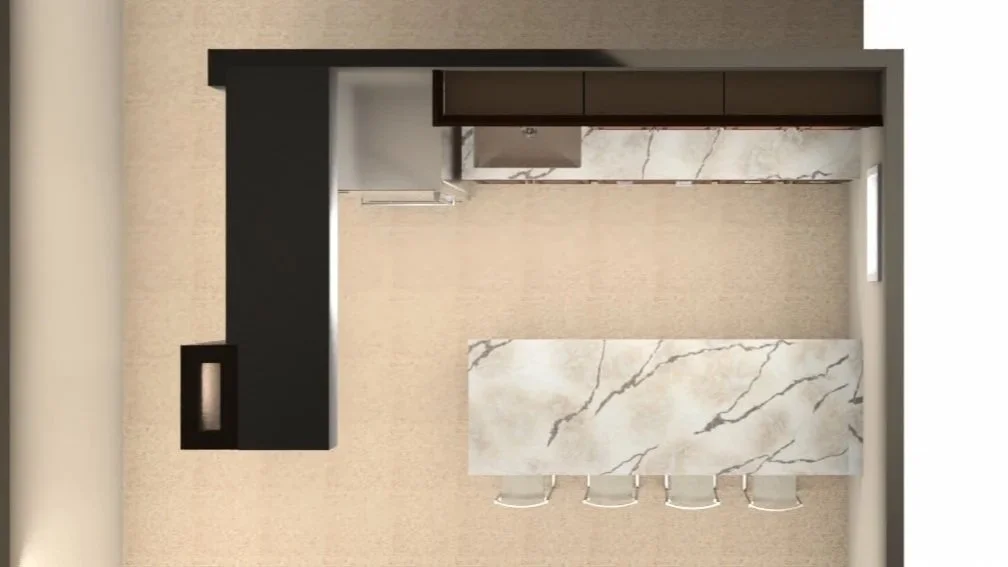
The top view shows a better example of the overall layout. Initially, the client wanted an island, but I suggested a peninsula. This change would create more storage and more seating. The peninsula is bar height in order to provide even more storage, and to achieve the bar-style look the clients envisioned.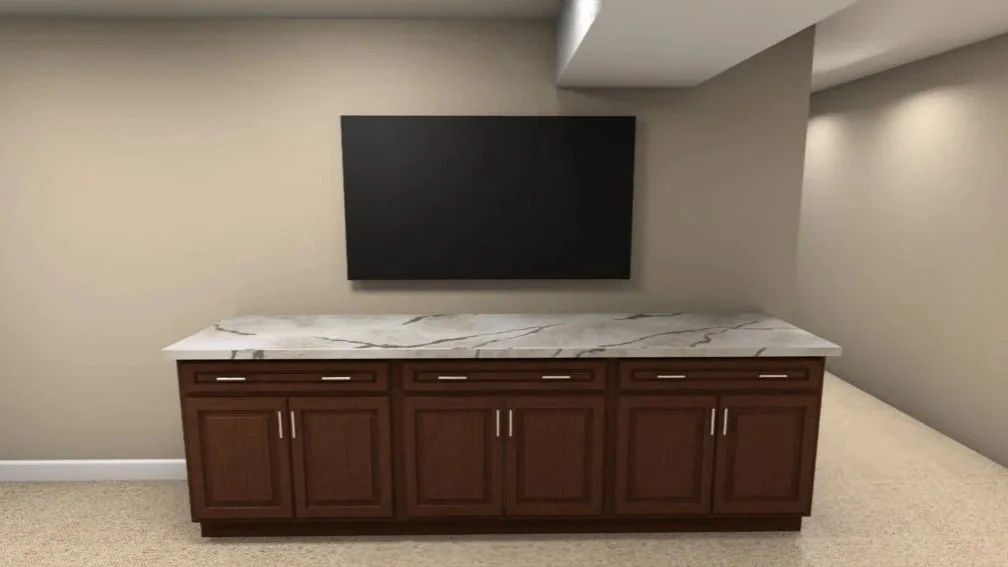
We also added cabinets underneath their television in order to better incorporate the two areas. The basement has a large open floor plan, so adding these cabinets under the television helped to fill the space and create a seamless look throughout the basement. This also provides more storage for things such as gaming consoles, remotes, books, and anything else they may want to store.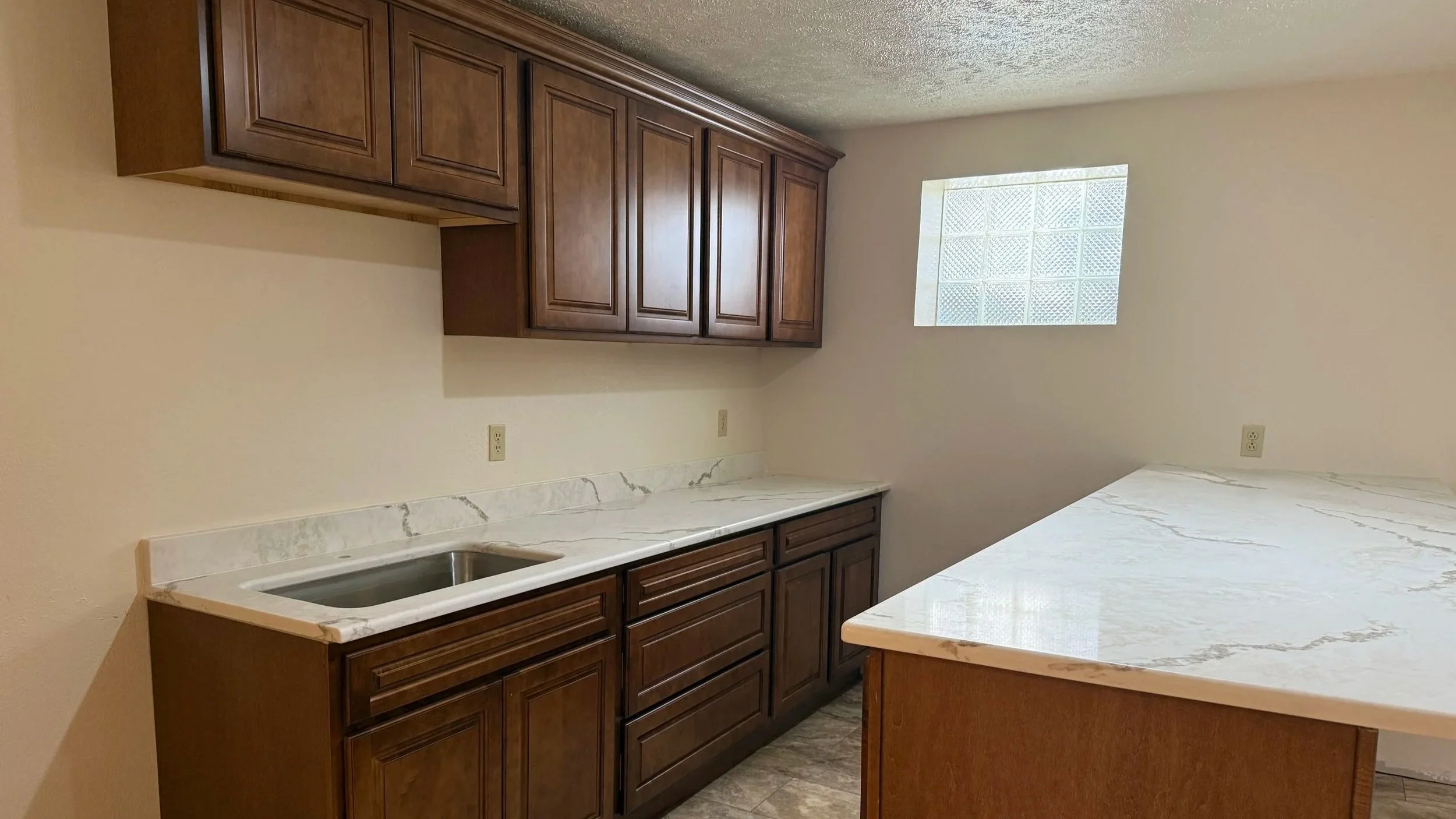
Below, I attached the partially finished product. This was directly after the countertop installation, and they later added the faucet, the fridge, and some bar stools.